
Fragment of a Bowl
Unknown Artist
14th–15th century
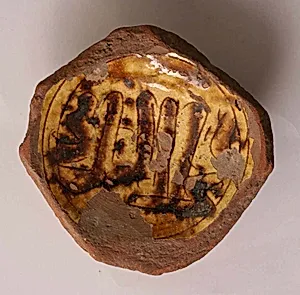
Medium
Earthenware; incised decoration through white slip and coloring under transparent glaze
Classification
Ceramics
Department
Islamic Art
Museum
Metropolitan Museum of Art, New York, NY
Credit
Rogers Fund, 1908
Accession Number
08.256.217
Rights
Public Domain
Art Historical Context
This exquisite fragment of a bowl, dating to the 14th–15th century, hails from the vibrant world of Islamic, where pottery was both a daily necessity and a canvas for artistic expression.ed from earthenware, it showcases the sophisticated technique of incised decoration artisans applied a white slip over the clay body, then scratched through it to reveal the reddish earthenware beneath, adding colored accents before firing under a transparent glaze. This sgraffito method, popular in regions like Persia, Syria, and Anatolia during the medieval Islamic golden age, allowed for intricate patterns that played with light and texture, evoking the opulence of courtly life. Though only a fragment survives, it whispers of the era's cultural splendor, when pottery workshops flourished under Timurid and Mamluk patronage, blending functionality with beauty. Geometric or floral motifs—common in such pieces—reflected Islamic aniconism and symbolized paradise gardens. Acquired through the Rogers Fund in 1908, this piece now graces the Metropolitan Museum of Art's Islamic Art department, offering visitors a tangible link to the ingenuity of anonymous master potters whose innovations influenced ceramics across Eurasia.