
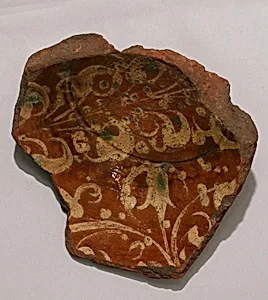
Fragment of a Bowl
Unknown Artist
14th–15th century
Medium
Earthenware; slip-painted under transparent glaze
Classification
Ceramics
Department
Islamic Art
Museum
Metropolitan Museum of Art, New York, NY
Credit
Rogers Fund, 1913
Accession Number
13.190.36
Rights
Public Domain
Art Historical Context
This enchanting fragment of a bowl, to the 14th–15th century, a glimpse into the refined world of Islamic ceramics. Housed in the Metropolitan Museum of Art's Department of Islamic Art, it exemplifies the artistry of anonymous potters from regions like Persia or Central Asia during a golden age of cultural flourishing under dynasties such as the Timurids. Acquired through the Rogers Fund in 191, this earthenware piece survives as a testament to everyday luxury, where even humble bowls were adorned with sophistication. The medium—slip-painted under a transparent glaze—highlights innovative techniques of the era. Potters applied liquid clay slip in intricate patterns or motifs before glazing and firing, creating vibrant, durable decorations that shimmered with color and depth. This method allowed for bold geometric designs, floral motifs, or calligraphy, blending functionality with aesthetic delight and influencing later ceramic traditions across the Islamic world and beyond. Though just a fragment, it whispers stories of vibrant markets, royal tables, and skilled workshops, inviting us to appreciate the ingenuity of medieval artisans who turned clay into poetry.