
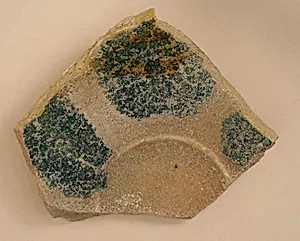
Fragment of a Bowl
Unknown Artist
late 9th–10th century
Medium
Earthenware; glazed
Classification
Ceramics
Department
Islamic Art
Museum
Metropolitan Museum of Art, New York, NY
Credit
Gift of Mr. and Mrs. Wendell M. Hastings, 1960
Accession Number
60.23.7
Rights
Public Domain
Art Historical Context
This exquisite fragment of a glazed earthenware bowl hails from the Islamic world of the late 9th to 10th century, a age of artistic innovation under the Abbasidiphate. Crafted an unknown artisan, it offers a glimpse into the everyday elegance of tableware used by merchants, scholars, and families across regions like Iraq and Persia. Donated to the Metropolitan Museum of Art 1960 by Mr. and Mrs. Wendell M Hastings, this piece resides in the Islamic Art department reminding us how even shards can preserve cultural splendor. Glazed earthenware marked a pivotal advancement in Islamic ceramics during this era, transforming humble clay into durable, shimmering vessels. The glazing technique—firing a tin-opacified glaze over low-fired earthenware—created a glossy, waterproof surface ideal for bowls that held food and drink. These objects were not just functional; they symbolized technological prowess and aesthetic refinement, often exported along Silk Road trade routes, influencing ceramics from Spain to China. Though only a fragment survives, it whispers of vibrant designs—likely geometric patterns or floral motifs—that embodied Islamic artistry's harmony and abstraction. For museum visitors, it invites reflection on a world where pottery bridged utility and beauty, enduring through centuries.