
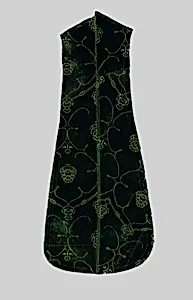
Fragment of a Chasuble (back)
Unknown Artist
mid-15th century
Medium
Velvet
Dimensions
48 3/4 x 20 1/2 in. (123.8 x 52 cm)
Classification
Textiles-Velvets
Culture
Italian
Department
Robert Lehman Collection
Museum
Metropolitan Museum of Art, New York, NY
Credit
Robert Lehman Collection, 1975
Accession Number
1975.1.1792B
Rights
Public Domain
Art Historical Context
This exquisite fragment from the back of a chasuble, a sleeveless outer vestment worn by priests during Catholic Mass, hails from mid-15th-century Italy Dating to the early Renaissance, it reflects the era's booming textile industry, particularly in cities like Venice and Lucca, skilled weavers produced luxurious fabrics for ecclesiastical use. Though the artist remains unknown, the piece's survival as a substantial remnant—measuring nearly four feet tall—hints at its original grandeur, likely adorning a sacred garment in a lavish church setting. Crafted from rich velvet, this textile showcases the medium's prestige: velvet's plush pile was labor-intensive to produce, involving complex looms that created a soft, shimmering surface ideal for liturgical splendor. In Renaissance Italy, such velvets symbolized both divine opulence and the Church's wealth, often dyed in deep hues and patterned to evoke heavenly motifs. Its classification as a voided or cut-pile velvet underscores the technical mastery of Italian artisans, who exported these treasures across Europe. Now part of the Robert Lehman Collection at The Metropolitan Museum of Art (acquired in 1975), this fragment invites us to imagine the vibrant ceremonies it once graced, bridging medieval piety with Renaissance innovation. A testament to textile artistry, it reminds visitors of how fabric could be as revered as painting or sculpture.