
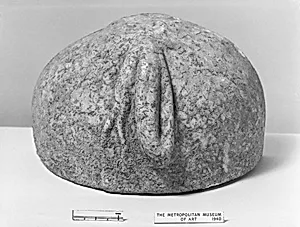
Fragment of a child's head
Unknown Artist
1st or 2nd century CE
Medium
Marble
Dimensions
3 5/8 × 6 15/16 × 3 1/2 in. (9.2 × 17.6 × 8.9 cm)
Classification
Stone Sculpture
Culture & Period
Roman · Imperial
Department
Greek and Roman Art
Museum
Metropolitan Museum of Art, New York, NY
Credit
Rogers Fund, 1922
Accession Number
22.139.53b
Rights
Public Domain
Art Historical Context
This delicate marble fragment, depicting a child's head from the Roman Imperial period (1st or 2nd century CE), a poignant glimpse into ancient family life. Carved with exquisite attention to youthful features—likely curly hair, soft cheeks, and an innocent expression—it measures just 3⅝ × 6¹⁵⁄₁₆ × 3½ inches, suggesting it once belonged to a larger bust or statue. Acquired through the Rogers Fund in 1922 now housed in the Metropolitan of Art's Greek and Roman Art department, this piece exemplifies the enduring appeal of Roman stone sculpture. Marble, prized for its luminous quality and workability, was a hallmark medium of Imperial Roman art, often sourced from quarries like those at Carrara. Artisans employed fine chiseling and polishing techniques to achieve lifelike textures, blending Greek-inspired idealism with Roman realism. Children's portraits were particularly cherished, reflecting the cultural emphasis on lineage, piety, and domestic virtue in elite Roman households. Though incomplete, this fragment captures the technical mastery and emotional resonance of Roman portraiture, reminding us how everyday tenderness was immortalized in stone amid the grandeur of empire. Visitors are invited to ponder the stories behind this tiny, timeless face.