
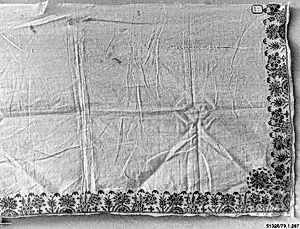
Fragment of a Cover
Unknown Artist
early 19th century
Medium
Linen or cotton(?), silk, metal wrapped thread; plain weave, embroidered
Dimensions
H. 40 in. (101.6 cm) W. 20 in. (50.8 cm)
Classification
Textiles-Embroidered
Department
Islamic Art
Museum
Metropolitan Museum of Art, New York, NY
Credit
Anonymous Gift, 1879
Accession Number
79.1.267
Rights
Public Domain
Tags
Art Historical Context
This exquisite *Fragment of a Cover* the early 19th offers a glimpse into the refined world of Islamic textile arts. Crafted by an unknown artist, it features a plain weave base of linen or cotton, richly embroidered with silk and shimmering metal-wrapped threads. 40 inches high by 20 inches wide, surviving piece likely once adorned a larger item, such as a bedspread or ceremonial covering, showcasing the everyday luxury of Islamic households during the Ottoman era or similar cultural spheres. The embroidery bursts with floral motifs—a hallmark of Islamic design symbolizing paradise gardens and eternal beauty. Del stitches in silk and metallic threads create texture and light play, techniques that demanded skilled labor and premium materials. These textiles were not mere decoration; they embodied cultural prestige, often produced for weddings, pilgrimages, or elite homes, blending functionality with spiritual resonance. Acquired through an anonymous gift in 1879 and now housed in the Metropolitan Museum of Art's Islamic Art Department, this fragment preserves a tactile legacy of artistry. Visitors can appreciate how such works bridged artistry and devotion, inviting us to imagine the hands that wove beauty into fabric centuries ago.