
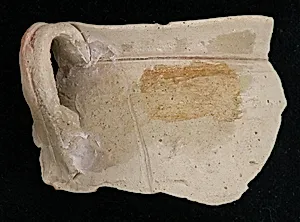
Fragment of a Cup
Unknown Artist
9th–10th century
Medium
Earthenware; unglazed
Dimensions
H. 1 15/16 in. (4.9 cm) W. 2 5/8 in. (6.7 cm) D. 13/16 in. (2.1 cm) Wt. 0.6 oz. (17 g)
Classification
Ceramics
Department
Islamic Art
Museum
Metropolitan Museum of Art, New York, NY
Credit
Gift of Mr. and Mrs. Wendell M. Hastings, 1960
Accession Number
60.23.1
Rights
Public Domain
Tags
Art Historical Context
This delicate fragment of a cup, from unglazed earthenware in the9th–10th, offers a tangible glimpse into everyday life in the Islamic world during the Abbasid era. Measuring just under 2 inches high and wide, this small shard—likely from a simple drinking vessel—highlights the humble yet essential role of ceramics in households across the early medieval Middle East. Unglazed earthenware, from fired clay without a vitreous coating, was a practical choice for durable, affordable tableware, reflecting techniques inherited from pre-Islamic traditions in regions like Mesopotamia and Persia. In the Department of Islamic Art at the Metropolitan Museum of Art, such fragments underscore the evolution of pottery during a golden age of Islamic culture, when artisans experimented with forms and slips before the widespread adoption of colorful glazes in later centuries. Though incomplete, this piece evokes the bustling markets and intimate meals of the time, where cups like this held water, herbal infusions, or rosewater. Its survival, thanks to the generous gift of Mr. and Mrs. Wendell M. Hastings in 1960, reminds us how even broken remnants preserve stories of daily rituals and craftsmanship. (198 words)