
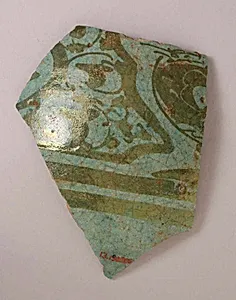
Fragment of a Dish
Unknown Artist
11th–12th century
Medium
Earthenware; luster-painted
Classification
Ceramics
Department
Islamic Art
Museum
Metropolitan Museum of Art, New York, NY
Credit
Rogers Fund, 1913
Accession Number
13.190.206
Rights
Public Domain
Art Historical Context
This enchanting *Fragment of Dish*, dating to the 11th–12th century, offers glimpse into the golden age of Islamic ceramics.ed from earthenware in the Department of Islamic Art at The Metropolitan Museum of Art (acquired through the Rogers Fund in 3), it exemplifies the mastery of artisans from the medieval Islamic world, likely regions like Persia or Iraq under Seljuk or Fatimid influence. Though only a fragment survives, it evokes the splendor of tableware used in elite households, where everyday objects became canvases for artistic expression. The standout feature is its luster-painted surface—a sophisticated technique where metallic oxides, such as copper and silver, were applied over a glazed base and fired in a reducing atmosphere. This created a shimmering, iridescent effect mimicking gold or jewels, transforming humble earthenware into luxurious wares rivaling precious metals. Lusterware, perfected in the Islamic world from the 9th century onward, was a closely guarded secret that spread via trade routes, highlighting cultural exchange across the Mediterranean and beyond. As a testament to enduring ingenuity, this piece underscores the Islamic tradition of blending utility with beauty, where geometric patterns or floral motifs (inferred from surviving luster fragments) symbolized harmony and divine order. Pause here to imagine it whole, gracing a caliph's banquet!