
Fragment of a Hanging
Unknown Artist
18th century
Medium
Linen, silk; embroidered
Dimensions
H. 76 in. (193 cm) W. 13 1/2 in. (34.3 cm)
Classification
Textiles-Embroidered
Department
Islamic Art
Museum
Metropolitan Museum of Art, New York, NY
Credit
Anonymous Gift, in honor of Karekin Beshir, 1969
Accession Number
69.142.2
Rights
Public Domain
Tags
Art Historical Context
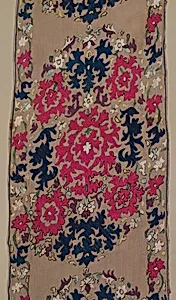
This exquisite *Fragment of a Hanging* the 18th century a glimpse into the refined world of Islamic textile arts. Crafted from linen and silk and richly embroidered, this tall, narrow panel—measuring 76 inches high and 13½ inches wide—was likely part of a larger decorative hanging used to adorn homes, mosques, or spaces. The floral motifs, a hallmark of Islamic design, evoke the lush gardens of paradise, symbol beauty, abundance, and spiritual harmony. In the 18th century, such embroidered textiles represented the pinnacle of artisanal skill across the Islamic world, from the Ottoman Empire to Persia and beyond. Silk threads lent a luxurious sheen, while embroidery techniques—often featuring intricate chain or satin stitches—highlighted the weavers' mastery and the cultural emphasis on pattern and rhythm over representation. These hangings served not just as decoration but as status symbols, traded along vibrant Silk Road routes. Today, this anonymous gift to the Metropolitan Museum of Art, honoring Karekin Beshir, invites us to appreciate the enduring legacy of Islamic craftsmanship. Though a fragment, it whispers stories of devotion, trade, and timeless elegance.