
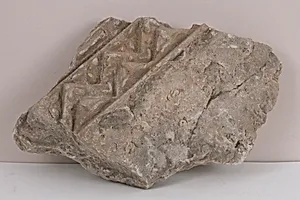
Fragment of a Molding
Unknown Artist
10th century
Medium
Plaster; molded
Dimensions
H. 3 7/8 in. (9.8 cm) W. 11 5/8 in. (29.5 cm) D. 8 5/8 in. (21.9 cm)
Classification
Plaster
Department
Islamic Art
Museum
Metropolitan Museum of Art, New York, NY
Credit
Rogers Fund, 1940
Accession Number
40.170.673
Rights
Public Domain
Art Historical Context
This delicate *Fragment of a Molding hails from the 10th century a golden age of Islamic art when architectural splendor flourished across the Islamic world, from Persia to Spain. Crafted by an unknown artist, this plaster piece likely adorned the walls or arches of a mosque, palace, or grand residence, showcasing the era's mastery of ornate decoration. Recovered and acquired through the Rogers Fund in 1940, it now resides in the Metropolitan Museum Art's Islamic Art department offering a tangible glimpse into medieval Islamic aesthetics. Molded plaster was a hallmark technique in Islamic architecture, prized for its versatility and ability to capture intricate designs without the weight of stone. Artisans would pour wet plaster into molds carved with geometric patterns, floral motifs, or arabesques—hallmarks of Islamic art that evoked paradise gardens and infinite harmony, while adhering to aniconic traditions avoiding human figures. Measuring just 3⅞ inches high, 11⅝ inches wide, and 8⅝ inches deep, this modest fragment belies its cultural weight, highlighting how everyday materials elevated sacred and secular spaces. Today, such artifacts remind us of the ingenuity behind Islam's architectural legacy, where form met spirituality in enduring beauty. Visitors can appreciate how this survivor of time bridges us to a vibrant past.