
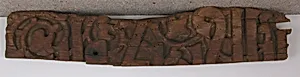
Fragment of a Panel
Unknown Artist
9th century
Medium
Wood; carved
Dimensions
H. 5 5/8 in. (14.3 cm) W. 26 9/16 in. (67.5 cm) D. 1 in. (2.5 cm) Wt. 29 oz. (822.2 g)
Classification
Wood
Department
Islamic Art
Museum
Metropolitan Museum of Art, New York, NY
Credit
Gift of Marilyn Jenkins, in memory of her father, Dr. Arthur M. Jenkins, 1982
Accession Number
1982.478.8
Rights
Public Domain
Tags
Art Historical Context
This exquisite *Fragment of a Panel*, carved from wood in the 9th, offers a glimpse into the refined artistry of early Islamic architecture. Housed in the Metropolitan Museum of Art's Department Islamic Art, this slender piece—measuring just 5⅝ inches high and over 26 inches wide—likely originated from a larger architectural element, such as a screen, door, or wall panel in a mosque or. The 9th century, during Abbasid Caliphate's golden age, saw woodcarving flourish as a medium for adorning sacred and secular spaces, blending functionality with spiritual beauty. The carving technique exemplifies Islamic artisans' mastery of intricate surface decoration, often featuring geometric patterns, vegetal motifs, or arabesques that evoke infinity and divine order—hallmarks of aniconic art avoiding human figures. Though a fragment, its preservation highlights the fragility of organic materials like wood, which rarely survive centuries in the region's harsh climates. Donated in 1982 by Marilyn Jenkins in memory of her father, Dr. Arthur M. Jenkins, it serves as a tangible link to the cultural splendor of medieval Islam. Today, this artifact invites visitors to appreciate how everyday materials were transformed into symbols of sophistication, reminding us of the enduring legacy of Islamic design in global architecture.