
Fragment of a Relief
Unknown Artist
3rd–7th century
Medium
Stucco
Dimensions
5 3/4 x 4 1/2 in. (14.6 x 11.4 cm)
Classification
Sculpture
Culture
Central Asia
Department
Asian Art
Museum
Metropolitan Museum of Art, New York, NY
Credit
Rogers Fund, 1930
Accession Number
30.32.45
Rights
Public Domain
Art Historical Context
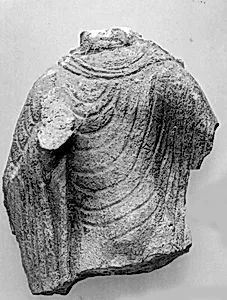
This delicate **Fragment of a Relief**, in stucco by an unknown artist Central Asia between the 3rd and 7th centuries, a tantalizing glimpse into the region's vibrant artistic traditions. Dating to a pivotal era when Central Asia served as a Silk Road crossroads, blending influences from Greco-Buddh, Persian, and Indian cultures, such reliefs often adorned Buddhist monasteries, stupas, or temples. Though incomplete, its small scale—measuring just 5¾ x 4½ inches—hints at intricate architectural decoration, capturing everyday sacred motifs or divine figures in low relief. Stucco, a versatile plaster medium made from lime, sand, and water, was prized in Central Asia for its moldability and affordability compared to stone carving. Artists hand-modeled or pressed it into molds, allowing for fine details that could be painted or gilded afterward. This technique flourished in arid climates, preserving fragile works like this one acquired through the Rogers Fund in 1930 for The Metropolitan Museum of Art's Asian Art collection. As a sculpture fragment, it embodies the cultural melting pot of ancient Central Asia, where art bridged empires and faiths. Visitors are invited to imagine its original splendor amid caravan hubs like those in modern-day Uzbekistan or Afghanistan, a testament to enduring creativity.