
Fragment of a Scarab of a Lady
Unknown Artist
ca. 1850–1640 B.C.
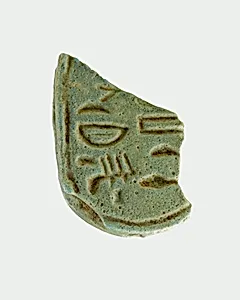
Medium
Light green faience
Dimensions
L. 1.2 × W. 0.7 × H. 0.6 cm (1/2 × 1/4 × 1/4 in.)
Classification
Scarab, private name and title, funerary epithets
Period
Middle Kingdom
Department
Egyptian Art
Museum
Metropolitan Museum of Art, New York, NY
Credit
Rogers Fund and Edward S. Harkness Gift, 1922
Accession Number
22.1.521
Rights
Public Domain
Tags
Art Historical Context
This delicate fragment of a scarabulet, crafted around 1850–1640 B.C. during Egypt's Middle Kingdom (late Dynasty 12–), once belonged to a lady of the time, as indicated by its inscriptions. Shaped like the sacred scarab beetle—symbol of the sun god Khepri and rebirth—these tiny objects (just 1.2 cm long) served as seals, jewelry, or protective talismans. Made of light green faience, a ceramic favored for its vibrant, gem-like sheen, it exemplifies the era's mastery of small-scale artistry amid political stability and cultural flourishing. Faience production involved molding fine quartz paste, glazing it with copper for that striking turquoise hue, and firing at low temperatures—techniques perfected in the Middle Kingdom for mass-producing affordable yet beautiful items. The scarab's back likely bore hieroglyphs, possibly the lady's name or titles, blending functionality with spirituality; such amulets were worn or buried to ensure eternal renewal. Housed in the Metropolitan Museum of Art's Egyptian Art department (Rogers Fund and Edward S. Harkness Gift, 1922), this fragment offers a glimpse into daily elite life, where even broken pieces whisper of ancient beliefs in immortality and divine protection. A testament to enduring craftsmanship!