
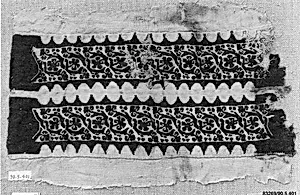
Fragment of a Sleeve
Unknown Artist
3rd–4th century
Medium
Wool, linen; plain weave, tapestry weave
Dimensions
Max. H. 10 1/4 in. (26 cm) Max. W. 6 1/2 in. (16.5 cm)
Classification
Textiles
Department
Islamic Art
Museum
Metropolitan Museum of Art, New York, NY
Credit
Gift of George F. Baker, 1890
Accession Number
90.5.401
Rights
Public Domain
Art Historical Context
This delicate **Fragment of a Sleeve**, to the 3rd–4th century, offers a tantalizing glimpse into ancient textile artistry from the early centuries of the Common Era. Crafted from wool and linen using plain weave and tapestry techniques, this small piece—measuring just 10¼ inches high and 6½ inches wide—likely once adorned a garment in region associated with the precursors to Islamic cultural traditions. Housed in the Metropolitan Museum of Art's Department of Islamic Art, it was generously gifted by George F. Baker in1890, preserving a fragment of everyday luxury from antiquity. The use of tapestry weave, where colored weft yarns create intricate patterns without supplementary warps, highlights sophisticated dyeing and weaving skills prevalent in the Near East and Egypt during this period. Plain weave provided a sturdy base, ideal for durable clothing. Such textiles were not merely functional; they showcased social status through vibrant motifs and fine craftsmanship, bridging domestic life and artistic expression. Though the artist remains unknown, this sleeve fragment underscores the enduring cultural importance of textiles in early societies, where clothing fragments like this reveal technological innovation and aesthetic sensibilities long before the rise of Islam. A humble survivor, it invites us to imagine the hands that wove it and the world it dressed.