
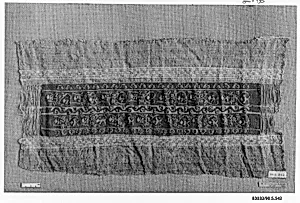
Fragment of a Sleeve
Unknown Artist
4th–5th century
Medium
Wool, linen; plain weave, tapestry weave
Dimensions
Max. H. 13 3/4 in. (35 cm) Max. W. 6 3/4 in. (17.2 cm)
Classification
Textiles
Department
Islamic Art
Museum
Metropolitan Museum of Art, New York, NY
Credit
Gift of George F. Baker, 1890
Accession Number
90.5.542
Rights
Public Domain
Art Historical Context
This exquisite *Fragment of a Sleeve*, to the 4th–5th century, invites us to touch the everyday elegance of late antique life in the Near East or Egypt. Crafted from wool and linen by an unknown artist, it employs a combination of plain weave for sturdy structure and tapestry weave for potential—techniques that highlight the era's sophisticated textile traditions. Measuring just 13¾ by 6¾ inches at its maximum, this small survivor speaks volumes about garments worn by people long ago, preserved through the dry climates and burial practices of the region. Housed in the Metropolitan Museum of Art's Department of Islamic Art (a gift of George F. Baker in 1890), the fragment reflects the cultural crossroads of the time, where Byzantine, Sasanian, and early Islamic influences mingled. Textiles like this were not mere clothing but status symbols, often adorned with motifs symbolizing protection, fertility, or status—though wear has softened its details. The use of tapestry weave, labor-intensive and precise, underscores the value placed on handwoven finery, traded along ancient Silk Road routes. Step closer in our virtual gallery and ponder: what stories did this sleeve hold? It reminds us how fragile artifacts bridge millennia, revealing the artistry in the ordinary.