
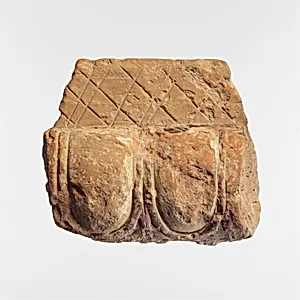
Fragment of a terracotta architectural tile
Unknown Artist
6th century BCE
Medium
Terracotta
Dimensions
Overall: 6 11/16 x 5 13/16in. (17 x 14.8cm)
Classification
Terracottas
Culture & Period
Lydian · Archaic
Department
Greek and Roman Art
Museum
Metropolitan Museum of Art, New York, NY
Credit
Gift of The American Society for the Excavation of Sardis, 1926
Accession Number
26.199.69
Rights
Public Domain
Tags
Art Historical Context
This delicate fragment of a terracotta tile hails from the ancient Lydian kingdom in Anatolia (modern-day Turkey), dating to the 6th BCE during the Archaic period. Discovered at Sardis, the opulent capital of Lydia—famed for its wealth under King Croesus—this piece measures just 6 11/16 x 5 13/16 inches, yet it offers a glimpse into the grandeur of Lydian buildings. Gifted to the Metropolitan Museum Art by the American Society for theation of Sardis in1926, it exemplifies use of fired clay tiles in roofs, friezes, or revetments, a practical yet elegant medium that allowed for intricate molding and vibrant painted details, now faded by time. The tile's standout feature is its "egg and dart" motif, a rhythmic pattern of alternating egg-like ovoids and arrowhead darts carved into the clay. This classical design, popular in Greek and Eastern Mediterranean architecture, symbolized fertility, rebirth, and the cycle of life—evident here in Lydian adoption of Hellenic influences amid their own prosperous culture. Such decorations adorned elite structures, blending local Anatolian traditions with emerging Archaic styles. As a survivor from Sardis's excavations, this fragment highlights Lydia's role as a cultural crossroads, bridging Persian, Greek, and Near Eastern worlds before Alexander's conquests. It invites us to imagine the tiled roofs of temples or palaces shimmering under the Anatolian sun, a testament to ancient craftsmanship.