
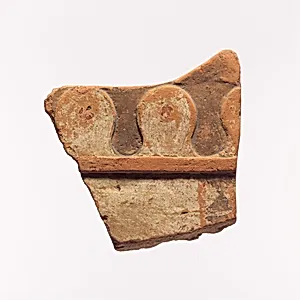
Fragment of a terracotta architectural tile
Unknown Artist
6th century BCE
Medium
Terracotta
Dimensions
Overall: 5 1/2 x 5 in. (14 x 12.7 cm)
Classification
Terracottas
Culture & Period
Lydian · Archaic
Department
Greek and Roman Art
Museum
Metropolitan Museum of Art, New York, NY
Credit
Gift of The American Society for the Excavation of Sardis, 1926
Accession Number
26.199.73
Rights
Public Domain
Art Historical Context
This modest fragment of a terracotta tile hails from the ancient Lydian kingdom in Anatolia (modern-day Turkey), dating to the 6th BCE during the Archaic period. Unearthed at Sardis, the opulent capital famed for King Croesus's legendary wealth, it offers a glimpse into Lydian building practices. Though only about 5½ x 5 inches, it likely adorned a roof or wall, showcasing the era's blend of functionality and subtle decoration in everyday architecture. Terracotta, or fired clay, was a versatile medium prized for its durability and affordability, allowing intricate molding or stamping before firing. Lydian artisans excelled in such techniques, producing tiles that protected grand structures while adding visual interest—perhaps with relief patterns evoking nature or myth, though this fragment's specifics remain tantalizingly incomplete. Its survival speaks to the resilience of ancient craftsmanship amid earthquakes and conquests. Displayed in the Metropolitan Museum of Art's Greek and Roman Art department, this piece highlights Lydia's cultural crossroads, bridging Near Eastern traditions and emerging Greek influences. A gift from the 1926 Sardis excavations, it invites us to ponder the lives of builders in a prosperous realm that minted the world's first coins.