
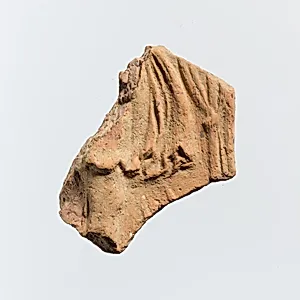
Fragment of a terracotta plaque
Unknown Artist
late 5th century BCE
Medium
Terracotta
Dimensions
3 5/8 in. x 3 in. (9.2 cm x 7.6 cm)
Classification
Terracottas
Culture & Period
Greek · Classical
Department
Greek and Roman Art
Museum
Metropolitan Museum of Art, New York, NY
Credit
Gift of the Archaeological Institute of America, 1953
Accession Number
53.5.41
Rights
Public Domain
Art Historical Context
This delicate fragment of a terracotta, dating to the late 5th century BCE offers a glimpse into the vibrant of Classical Greek art. Crafted from fired clay—a favored medium for its affordability and versatility—terracotta plaques like this one were often produced in molds, allowing for mass creation of intricate reliefs. Measuring just 3⅝ × 3 inches (9.2 × 7.6 cm), its small scale suggests it may have adorned a household shrine, served as a votive offering, or decorated an architectural element, reflecting the everyday artistry of ancient Greece during the Golden Age. The Classical period, spanning the 5th century BCE, marked a pinnacle of Greek cultural achievement, with Athens at its height following victories over Persia. Terracotta works democratized art, making mythological or daily life scenes accessible beyond elite marble sculptures. Though the exact imagery on this fragment is not specified, such plaques typically captured dynamic figures in high relief, showcasing the era's mastery of proportion, movement, and narrative storytelling—hallmarks of artists like Phidias. A generous gift to the Metropolitan Museum of Art from the Archaeological Institute of America in 1953, this piece bridges us to the rituals and aesthetics of ancient Greeks, reminding us how even humble fragments preserve profound cultural echoes.