
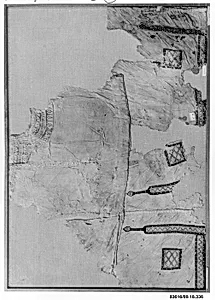
Fragment of a Tunic
Unknown Artist
5th–6th century
Medium
Wool, linen; plain weave, tapestry weave
Dimensions
Max. H. 28 3/4 in. (73 cm) Max. W. 20 1/4 in. (51.4 cm)
Classification
Textiles
Department
Islamic Art
Museum
Metropolitan Museum of Art, New York, NY
Credit
Purchase by subscription, 1889
Accession Number
89.18.336
Rights
Public Domain
Art Historical Context
This exquisite *Fragment of a Tunic* from the 5th–6th offers a glimpse into the daily elegance of Late Antique life. Crafted from wool and linen using plain weave for the foundation and tapestry weave for decoration, this substantial piece—measuring nearly 29 inches high and 20 inches wide—likely once adorned a garment in a vibrant, multicultural world bridging the Byzantine, Sasanian, and Islamic spheres. Acquired by the Metropolitan Museum of Art in 1889 through public subscription, it now resides in the Islamic Art department, highlighting the continuity of textile traditions across cultures. The dual weaving techniques showcase remarkable skill: plain weave provided sturdy, breathable fabric ideal for clothing, while tapestry weave allowed artisans to create intricate, colorful motifs directly in the cloth—often figurative scenes, geometric patterns, or floral designs symbolizing prosperity and protection. These methods, perfected in regions like Egypt or the Near East, preserved dyes from natural sources, making such fragments rare survivors of ancient wardrobes exposed to time and climate. As a testament to early textile innovation, this fragment underscores the cultural exchange along ancient trade routes, where garments were not just functional but status symbols. Visitors can appreciate how such pieces influenced later Islamic opulence in weaving, bridging antiquity to the medieval Islamic golden age.