
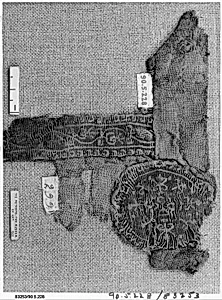
Fragment of a Tunic
Unknown Artist
5th century
Medium
Wool, linen; plain weave, tapestry weave
Dimensions
Max. H. 5 1/2 in. (14 cm) Max. W. 4 9/16 in. (11.6 cm)
Classification
Textiles
Department
Islamic Art
Museum
Metropolitan Museum of Art, New York, NY
Credit
Gift of George F. Baker, 1890
Accession Number
90.5.228
Rights
Public Domain
Art Historical Context
This delicate **Fragment of a Tunic from the 5th offers a tantalizing glimpse into the daily life and craftsmanship of the late ancient world. Crafted from wool and linen using plain weave for the base and tapestry weave decorative elements, this small piece—measuring just 5½ by 4⅝ inches—was once part of a garment worn in the Near East or Egypt, regions later central to Islamic culture. Its placement in the Metropolitan Museum of Art's Islamic Art department highlights how early textile traditions bridged late antiquity and the dawn of Islam. The dual-weave technique is particularly noteworthy: plain weave provided sturdy, breathable fabric ideal for tunics, while tapestry weave allowed artisans to create vibrant, pictorial motifs—though faded here, they likely featured geometric or figural designs common in Coptic or Sasanian-influenced textiles. These methods preserved colors and patterns without relying on dyes that might fade, showcasing sophisticated pre-industrial technology. Gifted to the Met in 1890 by philanthropist George F. Baker, this fragment survives as a testament to ephemeral art forms. It reminds us how clothing carried cultural stories, blending utility with beauty in an era of cultural exchange along ancient trade routes. A humble survivor, it invites us to imagine the wearer navigating bustling markets or desert caravans.