
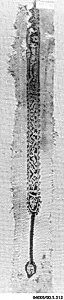
Fragment of a Tunic
Unknown Artist
3rd–4th century
Medium
Wool, linen; plain weave, tapestry weave
Dimensions
Max. H. 15 3/8 in. (39 cm) Max. W. 1 15/16 in. (5 cm)
Classification
Textiles
Department
Islamic Art
Museum
Metropolitan Museum of Art, New York, NY
Credit
Gift of George F. Baker, 1890
Accession Number
90.5.312
Rights
Public Domain
Art Historical Context
This delicate fragment of a tunic, to the 3rd–4th, offers a glimpse into the vibrant textile traditions of Late Antique Egypt. Crafted from wool and linen using plain weave for the sturdy ground fabric and tapestry weave for decorative elements, it exemplifies the sophisticated techniques of ancient weavers. At just 15⅜ inches high and under 2 inches wide, this narrow strip likely came from the garment's border or sleeve, where colorful patterns would have caught the eye. Preserved in the Metropolitan Museum of Art's Department of Islamic Art—thanks to a 1890 gift from George F. Baker—the piece reflects the cultural crossroads of the Nile Valley, blending local Coptic influences with broader Mediterranean trade networks. Tapestry weaving, a labor-intensive method where colored weft threads create motifs without floating yarns, allowed for intricate designs in naturally dyed wool, highlighting the era's mastery of color and pattern. Such fragments are invaluable for understanding daily life in antiquity: tunics were everyday attire for all classes, often adorned to signify status or region. This survivor speaks to the durability of these crafts, bridging pre-Islamic Egypt to later Islamic textile arts that flourished in the same workshops.