
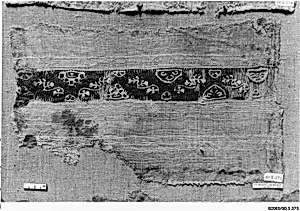
Fragment of a Tunic
Unknown Artist
5th–6th century
Medium
Wool, linen; plain weave, tapestry weave
Dimensions
Max. H. 11 5/16 in. (28.7 cm) Max. W. 6 1/2 in. (16.5 cm)
Classification
Textiles
Department
Islamic Art
Museum
Metropolitan Museum of Art, New York, NY
Credit
Gift of George F. Baker, 1890
Accession Number
90.5.373
Rights
Public Domain
Art Historical Context
This delicate fragment of a tunic, to the 5th–6th, offers a glimpse into the daily lives of people in the early medieval Near East or Egypt. Crafted from wool and linen—staple fibers valued for their durability and availability—the piece survives as a testament to ancient textile preservation, likely aided by arid burial conditions. Now housed in the Metropolitan Museum Art's Department of Islamic Art, it measures just 11 5/16 inches high by 6 1/2 inches wide,ing at its original role as a decorative panel on everyday garments worn by men, women, or children. The artwork showcases sophisticated weaving techniques: a plain weave forms the sturdy ground fabric, while tapestry weave creates vibrant, pictorial motifs (though faded today). Tapestry weaving, where colored weft threads are inserted to form designs without floats, was a labor-intensive method prized for its colorfastness and fine detail. This blend of functionality and artistry reflects advanced craft traditions in Late Antique societies, where textiles were both clothing and status symbols. As a gift to the Met from George F. Baker in 1890, this fragment underscores the cultural crossroads of pre-Islamic and early Islamic worlds. It highlights how clothing conveyed identity, trade, and artistry, bridging everyday utility with enduring aesthetic appeal. Visitors can appreciate how such small survivals illuminate lost fashions and skilled hands from over 1,500 years ago.