
Fragment of a votive bracelet
Unknown Artist
ca. 1295–1070 B.C.
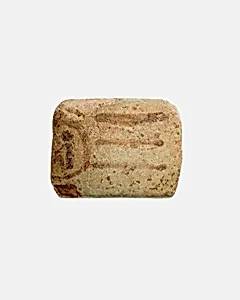
Medium
Faience
Dimensions
H. 2.7 × W. 3.5 × Th. 0.9 cm (1 1/16 × 1 3/8 × 3/8 in.)
Classification
Votive bracelet
Period
New Kingdom, Ramesside
Department
Egyptian Art
Museum
Metropolitan Museum of Art, New York, NY
Credit
Gift of Egypt Exploration Fund, 1909
Accession Number
09.182.19.16
Rights
Public Domain
Art Historical Context
This delicate fragment of a votive bracelet hails from Egypt's New Kingdom, specifically the Ramesside period (Dynasties 19–20, ca. 1295–1070 B.C.), a golden age of imperial power under pharaohs like Ramses II. Votive objects like this were offered to deities in temples as acts of piety, seeking divine favor or gratitude. Though only a small piece survives—measuring just 2.7 cm high—it hints at the opulent jewelry worn or dedicated by ancient Egyptians, blending everyday devotion with artistic finesse. Crafted from faience, a signature Egyptian material of glazed quartz paste fired to a vibrant turquoise hue, this bracelet fragment exemplifies accessible luxury. Faience mimicked costly lapis lazuli or turquoise, making sacred adornments available beyond the elite. The technique involved molding fine silica paste, glazing it with copper for color, and low-temperature firing, resulting in a glossy, durable surface ideal for amulets and jewelry that endured millennia. Displayed in the Metropolitan Museum of Art's Egyptian Art department (gift of the Egypt Exploration Fund, 1909), this artifact illuminates Ramesside religious life, where personal offerings bridged the human and divine. Imagine pilgrims presenting such bracelets at grand temples like Karnak—tiny tokens of eternal faith.