
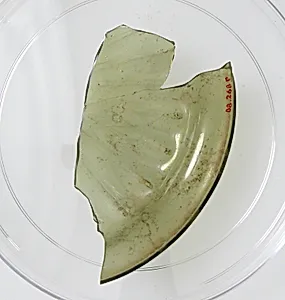
Fragment of Bowl
Unknown Artist
4th–early 5th century
Medium
Glass
Dimensions
Storage (petri dish diam.): 5 9/16 in. (14.2 cm)
Classification
Glass-Vessels
Culture
Coptic
Department
Medieval Art
Museum
Metropolitan Museum of Art, New York, NY
Credit
Rogers Fund, 1908
Accession Number
08.268.79
Rights
Public Domain
Tags
Art Historical Context
This delicate fragment of a glass bowl, dating to the 4th–early 5th century, offers a glimpse into the vibrant world of Coptic Egypt during the Late Antique period. Crafted by an unknown artist, it belongs to a tradition of glass vessels that bridged ancient Egyptian craftsmanship with emerging Christian influences. Coptic culture, flourishing in Egypt after the Roman era, produced everyday objects like bowls that were both functional and beautifully made, often reflecting the region's advanced glassmaking techniques such as free-blowing or molding. Glass was a prized medium in Coptic art, valued for its transparency and ability to capture light, symbolizing purity and the divine in early Christian contexts. Though only a fragment remains—housed today in a protective petri dish measuring 5 9/16 inches (14.2 cm) in diameter—this piece exemplifies the technical skill of Coptic artisans, who created durable, iridescent wares for domestic use. Acquired through the Rogers Fund in 1908, it now resides in the Metropolitan Museum of Art's Medieval Art Department, reminding us of Egypt's enduring legacy in the decorative arts. (198 words)