
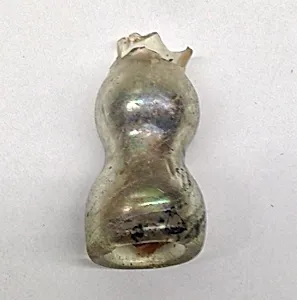
Fragment of Flask Necks
Unknown Artist
13th century
Medium
Glass
Dimensions
(b) L. 1 13/16 in. (4.6 cm)
Classification
Glass-Vessels
Culture
French or German and Syrian
Department
Medieval Art
Museum
Metropolitan Museum of Art, New York, NY
Credit
Gift of Clarence H. Mackay, Archer M. Huntington, Stephen H. P. Pell and Bashford Dean, 1928
Accession Number
28.99.59b
Rights
Public Domain
Tags
Art Historical Context
This delicate fragment, known as *Fragment of Flask Necks dates to the 13th century and exemplifies glassworking from either French or German origins with possible Syrian influences. Measuring just 1 13/16 inches (4.6 cm) in length, it preserves the slender neck of what was once a functional flask—a common vessel for oils, perfumes, or pilgrim souvenirs. Crafted in transparent glass, such pieces highlight the era's advanced techniques, likely involving glassblowing to create thin, elegant forms that balanced utility with subtle beauty. In the 13th century, thriving trade routes across the Mediterranean facilitated cultural exchanges, blending European and Near Eastern glass traditions. Syrian artisans were renowned for their colorful, iridescent wares, which inspired or directly reached French and German workshops. This fragment reflects that fusion, underscoring glass's role as a luxury good in medieval society, often traded along pilgrimage paths or used in daily rituals. Now in the Metropolitan Museum of Art's Medieval Art department—thanks to generous 1928 gifts from donors like Clarence H. Mackay and Bashford Dean—this artifact invites us to ponder the interconnected world of the Middle Ages. Though small, it whispers stories of craftsmanship and commerce that shaped European aesthetics.