
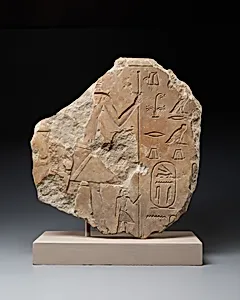
Fragment of relief with a figure?
Unknown Artist
ca. 2649–2100 B.C.
Medium
Limestone
Dimensions
H. 20.6 × W. 30 × D. 7.8 cm (8 1/8 × 11 13/16 × 3 1/16 in.)
Classification
Relief fragment, figure
Period
Old Kingdom
Department
Egyptian Art
Museum
Metropolitan Museum of Art, New York, NY
Credit
Rogers Fund and Edward S. Harkness Gift, 1922
Accession Number
22.3.325
Rights
Public Domain
Art Historical Context
This intriguing fragment of limestone relief, dating to Egypt's Old Kingdom Dynasty 6 (ca. 2649–2100 B.C.), offers a tantalizing glimpse into the artistry of ancient tomb decoration. Carved during the late Old Kingdom—a time of monumental pyramid-building and elaborate funerary practices—this piece likely originated from a noble's tomb wall. The partial figure, though unidentified, exemplifies the Egyptians' skill in capturing human form to ensure eternal sustenance for the deceased, reflecting deeply held beliefs in the afterlife. Crafted from fine-grained limestone, a favored medium for its workability and availability along the Nile, the relief employs the classic sunk-relief technique. Here, the figure is incised into the stone surface, creating crisp outlines and subtle modeling that would have been vividly enhanced with pigments, now faded. Such fragments are invaluable, preserving scenes of daily life, offerings, or rituals that humanize the pharaohs' era. Acquired in 1922 through the Rogers Fund and Edward S. Harkness Gift, this artifact at the Metropolitan Museum of Art underscores the Old Kingdom's artistic legacy: a harmonious blend of realism and symbolism that influenced millennia of Egyptian art. Stand close, and imagine the bustling workshops of Memphis bringing stone to life.