
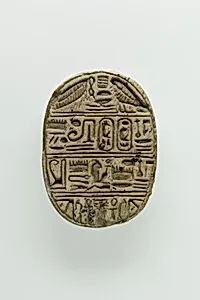
Fragment of Scarab Inscribed for Seti I
Unknown Artist
ca. 1294–1279 B.C.
Medium
Glazed steatite
Dimensions
L. 3.7 cm (1 7/16 in.)
Classification
Scarab, Seti I, hieroglyphs, royal titles, epithet, Ptah
Period
New Kingdom
Department
Egyptian Art
Museum
Metropolitan Museum of Art, New York, NY
Credit
Rogers Fund, 1909
Accession Number
09.180.928
Rights
Public Domain
Art Historical Context
This exquisite fragment of a scarab inscribed for Pharaoh Seti I, dates to Egypt's New Kingdom (Dynasty 19, ca. 1294–1279 B.C.). Carved from glazed steatite—a soft soapstone coated with a vibrant glassy frit—the scarab's iridescent-green sheen mimics the precious stones favored by royalty, making even small amulets like this one (just 3.7 cm long) symbols of divine power. Scarabs, shaped like the sacred dung beetle, represented rebirth and the sun god Khepri, often serving as seals, jewelry, or protective talismans worn by the elite. Seti I, a warrior-king renowned for expanding Egypt's empire through campaigns in Nubia and the Levant, commissioned such inscriptions to invoke his eternal protection and legitimacy. The hieroglyphs on this fragment likely bear his throne name or cartouche, a common practice to align the owner with pharaonic might. Though incomplete, it offers a tangible glimpse into Ramesside artistry, where precision carving and glazing techniques elevated everyday soapstone into objects of profound spiritual significance. Acquired through the Rogers Fund in 1909, this piece from the Metropolitan Museum of Art's Egyptian collection highlights the enduring allure of New Kingdom craftsmanship, bridging ancient beliefs in renewal with the pharaoh's unyielding legacy.