
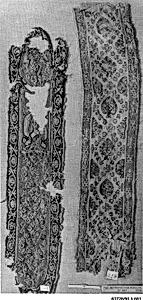
Fragment of Shoulder Band
Unknown Artist
5th century
Medium
Wool, linen; tapestry weave
Dimensions
Max. H. 13 in. (33 cm) Max. W. 3 3/8 in. (8.5 cm)
Classification
Textiles
Department
Islamic Art
Museum
Metropolitan Museum of Art, New York, NY
Credit
Gift of George F. Baker, 1890
Accession Number
90.5.681
Rights
Public Domain
Art Historical Context
This delicate *Fragment of Band* from the 5th century a glimpse into the artistry of Late Antique textiles, likely originating from Egypt or the Near East. Crafted wool and linen in a tapestry weave, it measures just 13 inches high and ⅜ inches wide, serving as an ornamental strip for garments like tunics. Worn across the shoulders, such bands elevated everyday clothing with vibrant patterns, showcasing the wearer's status and cultural sophistication. The tapestry technique is particularly noteworthy: weft yarns of colored wool completely cover the linen warp, creating a durable, pictorial surface ideal for intricate motifs. This labor-intensive method, popular in the Mediterranean world, bridged classical and early medieval traditions, preserving designs that influenced later Islamic textiles. Though the artist remains unknown, the fragment's preservation highlights the exceptional quality of ancient weaving. Housed in the Metropolitan Museum of Art's Islamic Art Department as a gift from George F. Baker in 1890, this piece underscores the continuity of textile arts across cultures. It invites us to imagine the hands that wove it amid the bustling trade routes of antiquity, where wool and linen met to tell stories in thread.