
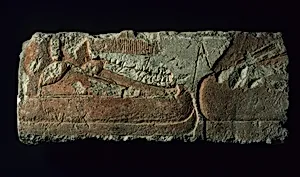
Fragment with royal feet
Unknown Artist
ca. 1353–1336 B.C.
Medium
Limestone, paint (mostly modern)
Dimensions
h. 22.9 cm (9 in); w. 52.1 cm (20 1/2 in)
Classification
Talatat, royal feet
Period
New Kingdom, Amarna Period
Department
Egyptian Art
Museum
Metropolitan Museum of Art, New York, NY
Credit
Gift of Mr. and Mrs. Jonathan P. Rosen, 1991
Accession Number
1991.237.26
Rights
Public Domain
Tags
Art Historical Context
This limestone fragment from the New Kingdom’s Amarna Period captures a rare, intimate detail of royal life in ancient Egypt. Created around 1353–1336 B.C. during Dynasty 18, the small relief shows the feet of a royal figure, likely part of a larger scene once adorning a temple or palace wall. Its modest size—roughly nine inches high—belies the importance of such pieces in reconstructing the artistic world of the time. The Amarna Period stands out for its artistic experimentation under Pharaoh Akhenaten, favoring more fluid and naturalistic forms over the rigid conventions of earlier Egyptian art. Carved in limestone and once brightly painted (though most color today is modern restoration), the fragment reflects the era’s emphasis on royal presence and daily ritual. Even this partial view of feet conveys the careful attention given to proportion and movement in Amarna reliefs. As a surviving piece of Egyptian Art now in the Metropolitan Museum’s collection, it reminds visitors how fragments can illuminate broader cultural shifts, offering a tangible connection to the innovative spirit of Akhenaten’s reign.