
Fragments
Unknown Artist
8th–13th century
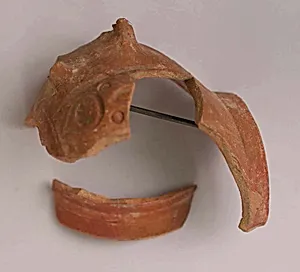
Medium
Earthenware; slip covered and unglazed
Dimensions
40.170.607a: H. 3 9/16 in. (9 cm) W. 2 3/4 in. (7 cm) D. 3 1/16 in. (7.7 cm) Thickness. 1/8 in. (0.3 cm) 40.170.607b: W. 2 in. (5.1 cm) D. 11/16 in. (1.8 cm) Thickness. 1/8 in. (0.3 cm)
Classification
Ceramics
Department
Islamic Art
Museum
Metropolitan Museum of Art, New York, NY
Credit
Rogers Fund, 1940
Accession Number
40.170.607a, b
Rights
Public Domain
Art Historical Context
These delicate earthenware fragments, dating from the 8th to 13th century, offer a glimpse into the everyday artistry of the Islamic world. Part of the Metropolitan Museum of Art's Islamic collection (acquired through the Rogers Fund in 0), they measure just a few inches across—piece 40.170.607a stands about 3½ inches high, while 40.170.607b is even smaller—highlighting the precision required in ancient ceramic production. Crafted from earthenware, a fired clay body common in early Islamic pottery, these pieces were coated with slip—a liquid clay mixture applied before firing to create a smooth surface for decoration or protection. Notably unglazed, they represent a foundational technique predating the era's famous lusterwares and turquoise-glazed ceramics of Abbasid and Fatimid courts. Such fragments likely originated from vessels, tiles, or architectural elements, reflecting the widespread use of ceramics in domestic life, mosques, and palaces across regions from Iraq to Egypt. Their survival speaks to the durability of these humble materials amid centuries of history, underscoring Islam's early contributions to ceramic innovation—bridging practical utility with subtle aesthetic appeal. Visitors can appreciate how these shards preserve the tactile essence of a vibrant cultural tradition.