
Frame Drum
19th century
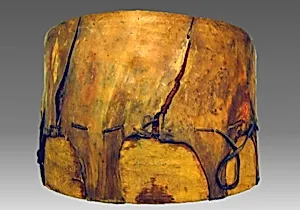
Medium
wood (ash?), skin (sheepskin)
Dimensions
Overall: 39.5 x 25.5cm (15 9/16 x 10 1/16in.) Other (head): 37cm (14 9/16in.)
Classification
Membranophone-single-headed / frame drum
Culture
Native American (Shoshone)
Department
Musical Instruments
Museum
Metropolitan Museum of Art, New York, NY
Credit
The Crosby Brown Collection of Musical Instruments, 1889
Accession Number
89.4.562a, b
Rights
Public Domain
Art Historical Context
This elegant frame drum, crafted by Shoshone artisans in the 19th, exemplifies the ingenuity of Native American musical traditions from the Great Basin region. 39.5 x 25.5 cm overall with a 37 cm head, it features a sturdy wooden frame—likely ash for its lightweight strength and resonance—and a taut sheepskin membrane stretched across one side. As a single-headed membranophone, it produces rich, resonant tones when struck, a design that prioritizes portability and intimate performance. In Shoshone culture, frame drums like this one held profound ceremonial and communal importance, accompanying songs, dances, and storytelling that connected people to their spiritual world and ancestors. The use of local materials underscores sustainable craftsmanship, where natural resources were transformed into tools for cultural expression. Though simple in form, its construction reflects skilled woodworking and hide preparation techniques passed down through generations. Acquired as part of The Crosby Brown Collection of Musical Instruments in 1889, this drum now resides in the Metropolitan Museum of Art's Department of Musical Instruments. It invites visitors to imagine the rhythmic heartbeat of Shoshone life echoing across the plains, bridging past and present in a tangible artifact of living heritage.