
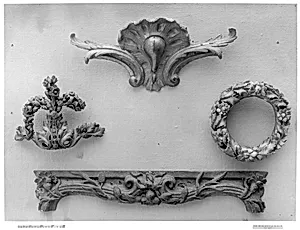
Frame fragment
Unknown Artist
ca. 1715–23
Medium
Carved and gilded wood
Dimensions
20 1/2 × 3 3/4 in. (52.1 × 9.5 cm)
Classification
Woodwork
Culture
French
Department
European Sculpture and Decorative Arts
Museum
Metropolitan Museum of Art, New York, NY
Credit
Gift of J. Pierpont Morgan, 1906
Accession Number
07.225.343
Rights
Public Domain
Art Historical Context
This exquisite frame fragment, crafted in France around 1715–23, exemplifies the opulent woodworking of the early 18th century during the Regency period following Louis XIV's death.ved from wood and lavishly gilded with gold leaf, measures 20½ × 3¾ inches and likely once adorned a grand painting, mirror, or portrait frame in a noble salon. Its intricate designs—though fragmented—hint at the era's shift toward lighter, more playful motifs emerging from the heavy Baroque style, foreshadowing the full bloom of Rococo elegance. The technique of carving and gilding was a hallmark of French decorative arts, where skilled artisans meticulously shaped wood into scrolling acanthus leaves, shells, or floral elements before applying thin sheets of gold for a shimmering, regal effect. This process not only enhanced visual splendor but also symbolized wealth and status, as gilding required rare materials and expert craftsmanship. Such frames were essential complements to masterpieces, elevating the viewer's experience in lavish interiors. Today, housed in the Metropolitan Museum of Art's Department of European Sculpture and Decorative Arts as a gift from J. Pierpont Morgan in 1906, this fragment offers a tangible glimpse into France's golden age of luxury. It reminds us how even supporting elements like frames were artworks in their own right, blending functionality with artistic virtuosity.