
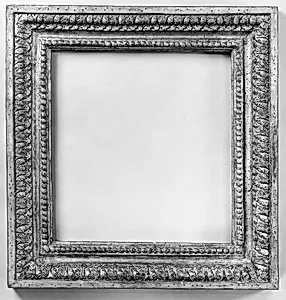
Frame made from fragment of architectural molding
Unknown Artist
late 17th century
Medium
Walnut
Dimensions
Overall: 23 11/16 × 22 7/16 in. (60.2 × 57 cm) Sight: 16 1/4 × 15 1/16 in. (41.2 × 38.3 cm) Rabbet: 17 9/16 × 16 5/16 in. (44.6 × 41.4 cm)
Classification
Frames
Culture
Italian, Rome
Department
Robert Lehman Collection
Museum
Metropolitan Museum of Art, New York, NY
Credit
Robert Lehman Collection, 1975
Accession Number
1975.1.2218
Rights
Public Domain
Art Historical Context
This exquisite walnut frame, crafted in late 17th-century Rome, exemplifies the grandeur of the Baroque era. Repurposed from a fragment of architectural molding—likely salvaged from a palatial interior or ecclesiastical decoration—it measures 23 11/16 × 22 7/16 inches overall, with a sight size of 16 1/4 × 15 1/16 inches. The carving, featuring bold scrolls, acanthus leaves, and undulating profiles, captures the dramatic flair of Roman Baroque design, where opulent surfaces mimicked the theatricality of architecture by masters like Bernini. In an age of lavish church and noble commissions, such frames were not mere supports for paintings but integral artworks that enhanced the viewer's awe. Walnut, prized for its rich grain and workability, allowed carvers to achieve deep relief and polished finishes that played with light and shadow—key Baroque techniques. This piece's origins in recycled molding highlight resourceful craftsmanship amid Rome's building boom, blending utility with artistry. Part of the Robert Lehman Collection at The Metropolitan Museum of Art since 1975, it invites us to appreciate frames as standalone treasures, revealing the hidden splendor of Italy's decorative arts tradition.