
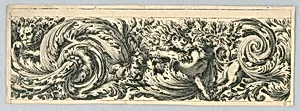
Frieze, from "Chasses et Feuillages"
Medium
Classification
Department
Smithsonian Collection
Museum
Smithsonian American Art Museum
Credit
Purchased for the Museum by the Advisory Council
Accession Number
1921-6-94-3
Rights
Public Domain
About this artwork
Research in Progress
Art Historical Context
Jean Le Pautre (1618–1682), a prominent French engraver, designer, and architect, created this elegant *Frieze, from "Chasses etuillages"* in 1663. Working during the opulent reign of Louis XIV Le Pautre was renowned for his intricate ornamental prints that blended Baroque exuberance with classical restraint. This print, part of a series evoking "Hunts and Foliage likely features decorative motifs of hunting scenes intertwined with lush foliage—hallmarks of 17th-century French decorative arts meant for architects, craftsmen, and nobility. As an etching or engraving, the medium allowed Le Pautre to disseminate sophisticated designs across Europe, influencing furniture, wallpaper, and interior decoration. Friezes like this one served as blueprints for grand architectural embellishments, capturing the era's fascination with nature's vitality and aristocratic pursuits. Le Pautre's precise linework and rhythmic compositions exemplified the French goût, or refined taste, that defined Versailles-era aesthetics. Acquired by the Smithsonian American Art Museum through its Advisory Council, this work highlights transatlantic exchanges in design. Even as research continues, it invites visitors to appreciate how such prints bridged European grandeur with emerging American artistic traditions, offering timeless inspiration for pattern and ornament.