
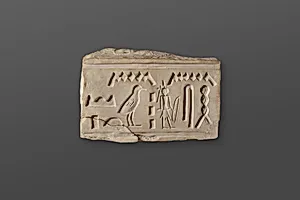
Frieze from the tomb of Mereri
Unknown Artist
ca. 2100–2030 B.C.
Medium
Limestone
Dimensions
H. 15.5 × W. 23.9 × D. 5.1 cm (6 1/8 × 9 7/16 × 2 in.)
Classification
Relief, tomb of Mereri
Period
First Intermediate Period
Department
Egyptian Art
Museum
Metropolitan Museum of Art, New York, NY
Credit
Gift of Egypt Exploration Fund, 1898
Accession Number
98.4.3c
Rights
Public Domain
Art Historical Context
This delicate limestone frieze, carved around 2100–2030 B.C. during Egypt's First Intermediate Period (asty 9), once adorned the tomb of Mer, likely a local official or elite figure in a time of political fragmentation following the Old Kingdom's grandeur. Measuring just 15.5 cm high, it exemplifies the modest yet poignant tomb art of provincial workshops, where resources were scarcer amid regional rivalries between Heracleopolis and Thebes. Expertly low-relief carved, the frieze features birds—symbolizing the soul's flight or offerings—and intricate hieroglyphs, blending naturalistic forms with sacred script. These elements served dual purposes: narrating Mereri's life and provisioning his ka (spirit) for eternity, a core tenet of Egyptian beliefs. The fine detailing on soft limestone highlights skilled craftsmanship, even in this transitional era's simpler styles. Housed in the Metropolitan Museum of Art thanks to the Egypt Exploration Fund's 1898 gift, this fragment offers a window into everyday afterlife rituals, bridging Egypt's monumental past and Middle Kingdom revival. A testament to enduring cultural resilience!