
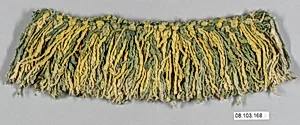
Fringe
Unknown Artist
17th–18th century
Medium
Cotton
Dimensions
8 x 2 1/2 inches (20.3 x 6.4 cm)
Classification
Textiles-Trimmings
Culture
probably European
Department
European Sculpture and Decorative Arts
Museum
Metropolitan Museum of Art, New York, NY
Credit
Rogers Fund, 1908
Accession Number
08.103.168
Rights
Public Domain
Art Historical Context
This delicate cotton fringe, dating to the 17th–18th centuries, exemplifies the exquisite textile trimmings that adorned Europe's lavish interiors and wardrobes. Measuring just 8 x 2½ inches (20.3 x 6.4 cm), this small yet intricate piece from the Metropolitan Museum of Art's European Sculpture and Decorative collection was acquired through the Rogers Fund in 8. Likely European in origin, it reflects the era's obsession with ornamentation during the Baroque and Rococo, when such embellishments transformed everyday fabrics into symbols of wealth and refinement. Crafted from cotton—a material increasingly valued for its versatility and fine weave—fringe like this was produced using skilled techniques such as looping, knotting, or braiding threads to create a cascading, tactile edge. These trimmings graced everything from opulent curtains and upholstery to elaborate garments, adding movement and luxury to spaces and attire. Though the artist remains unknown, the piece highlights the anonymous mastery of textile artisans whose work underpinned the grandeur of royal courts and prosperous homes. Today, this fringe invites us to appreciate the unsung artistry of decorative textiles, preserving a tactile glimpse into a world where every detail whispered elegance.