
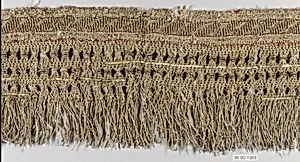
Fringe
Unknown Artist
18th century (?)
Medium
Silk and metal thread
Dimensions
L. 55 x W. 6 inches (139.7 x 15.2 cm)
Classification
Textiles-Trimmings
Culture
European
Department
European Sculpture and Decorative Arts
Museum
Metropolitan Museum of Art, New York, NY
Credit
Gift of The United Piece Dye Works, 1936
Accession Number
36.90.1968
Rights
Public Domain
Art Historical Context
This exquisite *Fringe* from the18th century exemplifies the opulent textile trimmings that adorned Europe's elite wardrobes and interiors. Crafted from luxurious silk and metal threads, this narrow band measures 55 inches long by 6 inches wide, designed as a decorative edging to elevate garments, upholstery, or drapery. The unknown European artisan wove these shimmering materials to create a tactile, light-catching effect, where the silk provided softness and the metal threads—likely gold or silver—added a regal gleam, reflecting the era's fascination with sumptuous surfaces. In the context of 18th-century decorative arts, such fringes were essential to Baroque and Rococo aesthetics, symbolizing wealth and craftsmanship amid the grandeur of absolutist courts and rising bourgeois luxury. Techniques like looping, knotting, or braiding threads demanded skilled labor, often by specialized workshops, turning functional trim into wearable art. Though its precise origin remains a mystery, its presence in the Metropolitan Museum of Art's European Sculpture and Decorative Arts collection—gifted by The United Piece Dye Works in 1936—highlights its enduring appeal as a window into everyday elegance of the period. Visitors, imagine this fringe swaying on a velvet gown at a Versailles ball— a subtle yet striking testament to the artistry hidden in the details of history.