
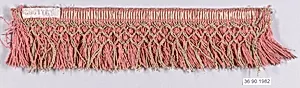
Fringe
Unknown Artist
ca. 1750
Medium
Silk and metal thread
Dimensions
L. 9 x W. 2 1/4 inches 22.9 x 5.7 cm
Classification
Textiles-Trimmings
Culture
Italian
Department
European Sculpture and Decorative Arts
Museum
Metropolitan Museum of Art, New York, NY
Credit
Gift of The United Piece Dye Works, 1936
Accession Number
36.90.1982
Rights
Public Domain
Art Historical Context
This exquisite *Fringe*, crafted around 1750 by an unknown Italian artisan, exemplifies the refined artistry of 18th-century European textiles Measuring just 9 inches long and 2¼ inches wide, this slender trim was designed to embellish the edges of garments, upholstery, or curtains, adding a touch of opulence to everyday luxury. Housed in the Metropolitan Museum of Art's Department of European Sculpture and Decor Arts, it was generously gifted by The United Piece Dye Works in 6, preserving a fragment of Italy's textile heritage. Woven from shimmering silk and intricate metal threads, the fringe highlights advanced techniques like knotting and looping, which created its cascading, tassel-like form. Silk, prized for its luster and dyeability, combined with metallic elements—likely gold or silver—evoked wealth and status during the Rococo era, when such trimmings adorned aristocratic attire and interiors. Italian workshops were renowned for this meticulous craftsmanship, blending functionality with decorative flair. Today, this modest yet magnificent piece invites us to appreciate the unsung labor behind grand designs, reminding visitors of how textiles wove status and beauty into the fabric of daily life in 18th-century Europe.