
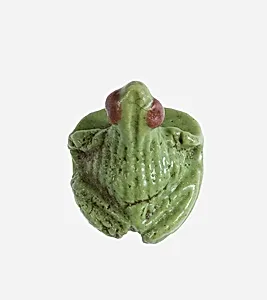
Frog Seal Amulet with an Ankh Hieroglyph on the Base
Unknown Artist
ca. 1390–1352 B.C.
Medium
Faience
Dimensions
L. 1.2 cm (1/2 in.); W. 1.1 cm (7/16 in.); H. 1 cm (3/8 in.)
Classification
Stamp seal, frog
Period
New Kingdom
Department
Egyptian Art
Museum
Metropolitan Museum of Art, New York, NY
Credit
Rogers Fund, 1911
Accession Number
11.215.48
Rights
Public Domain
Tags
Art Historical Context
This charming Frog Seal Amulet, crafted around 1390–1352 B.C. during Egypt's New Kingdom (Dynasty 18), exemplifies the exquisite miniature artistry of ancient Egyptian faience. Measuring just 1.2 cm long, this vibrant blue-green glazed ceramic piece features a frog form with an ankh hieroglyph—the universal symbol of life—etched on its base. Faience, a non-clay material made from crushed quartz and glazed for a luminous, jewel-like finish, was prized for its affordability and symbolic association with regeneration, mimicking the Nile's fertile floods. Frogs held profound cultural significance in ancient Egypt, representing fertility, rebirth, and the goddess Heqet, who oversaw childbirth and creation. As a seal amulet, this tiny object likely served dual purposes: a protective talisman worn by individuals for good fortune and vitality, and a practical stamp for sealing documents or goods. The ankh's placement on the base reinforces its life-affirming magic, blending everyday utility with profound spiritual power. Housed in the Metropolitan Museum of Art's Egyptian Art collection (Rogers Fund, 1911), this amulet offers a window into the New Kingdom's prosperous era, when such personal artifacts bridged the mortal world and the divine, ensuring prosperity in this life and the next.