
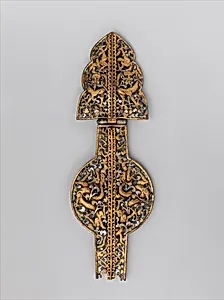
Frontal Plate from a Shaffron (Horse's Head Defense)
Unknown Artist
16th–17th century
Medium
Iron, gold, silver
Dimensions
H. 16 1/4 (41.3 cm); W. 5 3/8 in. (13.7 cm); Wt. 1 lb. 10.3 oz. (745.6 g)
Classification
Equestrian Equipment-Shaffrons
Culture
Tibetan
Department
Arms and Armor
Museum
Metropolitan Museum of Art, New York, NY
Credit
Purchase, Arthur Ochs Sulzberger Gift, 2008
Accession Number
2008.291
Rights
Public Domain
Art Historical Context
This elegant frontal plate from a shaffron, a protectivepiece for warhorses hails from Tibet in 16th–17th century. Craft from iron inlaid with shimmering gold and silver, it just 16¼ inches high and weighs about 1.6 pounds, designed to shield a horse's forehead while allowing mobility on the battlefield. Now housed in the Metropolitan Museum of Art's Arms and Armor Department, it exemplifies the fusion of utility and artistry in equestrian gear. In Tibetan culture, horses were vital for warfare, nomadic life, and elite ceremonies, making their armor a status symbol for warriors and nobility. The iron base provided robust defense against blades and arrows, while the precious metal overlays—likely applied through skilled techniques like damascening or gilding—added opulence and possibly protective symbolism, warding off evil spirits. Such decorations reflect broader Central Asian influences, blending Mongol might with intricate metalwork traditions. Though the artist remains unknown, this piece highlights Tibet's masterful armorers, who transformed functional equipment into wearable treasures. Imagine a thundering cavalry charge across Himalayan plateaus, where horse and rider shone as one— a testament to the era's martial splendor.