
Fuchu, section of sheet no. 5 from the series "Cutouts of the Fifty-three Stations (Gojusan tsugi harimaze)"
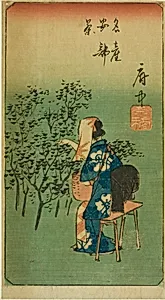
Medium
Color woodblock print; section of harimaze sheet (uncut sheet: 1939.1294)
Dimensions
18.2 × 10 cm (7 3/16 × 3 15/16 in.)
Classification
woodblock print
Department
Arts of Asia
Museum
Art Institute of Chicago
Accession Number
26411
Rights
Public Domain
Art Historical Context
This delicate color woodblock print by Utagawa Hiroshige captures a view of Fuchū, one of the fifty-three stations along Japan’s historic Tōkaidō highway. Created in 1852 as part of the series *Cutouts of the Fifty-three Stations (Gojusan tsugi harimaze)*, the image originally formed a small section of a larger uncut sheet designed for collectors to cut apart and paste into albums or screens. Hiroshige, a master of the ukiyo-e tradition, specialized in atmospheric landscapes that conveyed both the poetry of travel and the changing seasons. The harimaze format itself reflects the playful spirit of mid-nineteenth-century print culture, when publishers catered to an expanding audience eager for affordable, customizable souvenirs. Measuring just 18.2 by 10 centimeters, this fragment still conveys Hiroshige’s signature sensitivity to light, weather, and human activity along the road. Its modest scale invites close looking, revealing the fine lines and layered colors achieved through the demanding woodblock process. Today, the print offers visitors a window into Edo-period Japan’s fascination with journey and place, reminding us how art once traveled alongside pilgrims and merchants.
About the Artist
Utagawa Hiroshige · 1826–1869
Utagawa Hiroshige (1797–1858), born Andō Tokutarō, was the last great master of Japanese ukiyo-e woodblock printmaking and one of the most influential landscape artists in history. Born in Edo (modern Tokyo) into a low-ranking samurai family serving as fire wardens, Hiroshige transformed landscape printmaking into a poetic meditation on nature, weather, and everyday life. His revolutionary approac...