
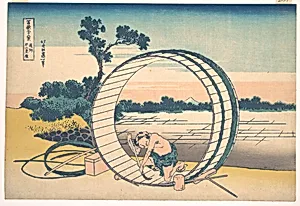
冨嶽三十六景 尾州不二見原|Fujimigahara in Owari Province (Bishū Fujimigahara), from the series Thirty-six Views of Mount Fuji (Fugaku sanjūrokkei)
ca. 1830–32
Medium
Woodblock print; ink and color on paper
Dimensions
H. 10 in. (25.4 cm); W. 15 in. (38.1 cm)
Classification
Prints
Culture & Period
Japan · Edo period (1615–1868)
Department
Asian Art
Museum
Metropolitan Museum of Art, New York, NY
Credit
The Howard Mansfield Collection, Purchase, Rogers Fund, 1936
Accession Number
JP2557
Rights
Public Domain
Tags
Art Historical Context
In Katsushika Hokusai's iconic series *Thirty-six Views of Fuji* (Fugaku sanjūrokkei), created 1830–32 during Japan's Edo period, *Fujigahara in Owari* captures the majestic mountain from a distant plain in the Owari region (modern-day Aichi Prefecture). This woodblock print, measuring about 10 by 15 inches, showcases everyday laborers—men working amid tall trees—gazing toward the snow-capped peak, blending human activity with nature's grandeur. Hokus, a master of ukiyo-e ("pictures of the floating world"), revolutionized printmaking by emphasizing landscapes over traditional figures, making Mount Fuji a recurring symbol of Japan's spiritual and natural allure. The medium of ink and color on paper highlights innovative techniques like bold Prussian blue skies, a vivid synthetic pigment imported via Nagasaki that allowed unprecedented depth and atmospheric effects. Produced through collaborative woodblock carving and printing, these affordable prints democratized art for Edo's urban middle class, influencing global artists like Van Gogh and Monet. Housed in the Metropolitan Museum of Art's Asian Art collection, this piece exemplifies Hokusai's lifelong obsession with Fuji—over 140 years of his 90-year career—inviting viewers to ponder humanity's humble place in the cosmos.
About the Artist
Katsushika Hokusai · 1760–1849
Katsushika Hokusai (1760-1849) stands as one of history's most influential artists, a Japanese master who revolutionized the ukiyo-e woodblock print tradition and profoundly shaped Western art. Born in the Katsushika district of Edo (modern-day Tokyo) to an artisan family, Hokusai lived through nearly nine decades of extraordinary creative evolution, adopting over thirty different artistic names t...