
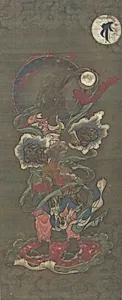
十二天像(風天)|Fujin (wind god)
Unknown Artist
14th century
Medium
Framed painting; ink and color on silk
Dimensions
39 x 16 in. (99.1 x 40.6 cm)
Classification
Paintings
Culture & Period
Japan · Muromachi period (1392–1573)
Department
Asian Art
Museum
Metropolitan Museum of Art, New York, NY
Credit
Gift of Susan Dwight Bliss, 1944
Accession Number
44.35.3
Rights
Public Domain
Art Historical Context
Behold the dynamic portrayal of *Fujin (Wind God)*, one of the Twelve Devas (Jūni Ten), fierce guardians in Japanese Buddhist cosmology who protect the Buddha from malevolent forces. This 14th-century framed painting captures Fujin in his iconic form—wild-haired, muscular, and bag-clad, wielding gusts of wind with a bulging sack. Rendered in ink and color on silk, the work exemplifies the delicate yet vibrant techniques of Japanese scroll painting, where flowing lines and bold pigments evoke movement and divine power. Created during Japan's Muromachi period (1392–1573), a time of Zen Buddhist influence and cultural refinement amid political upheaval, this artwork reflects the era's fusion of spiritual iconography and artistic elegance. Ink and color on silk, a prestigious medium, allowed for luminous effects and portability in temple rituals or private devotion. Fujin's fearsome yet protective presence underscores Shinto-Buddhist syncretism, blending native wind deities with imported Indian guardians. A generous gift from Susan Dwight Bliss in 1944, this treasure now graces the Metropolitan Museum of Art's Asian Art collection. Measuring 39 x 16 inches, it invites visitors to ponder the timeless dance of chaos and divinity in Japanese art.