
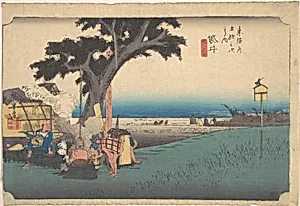
東海道五十三次之内 袋井 出茶屋の図|Fukuroi; De Chaya
ca. 1834
Medium
Woodblock print; ink and color on paper
Dimensions
9 3/4 x 14 1/3 in. (24.8 x 36.4 cm)
Classification
Prints
Culture & Period
Japan · Edo period (1615–1868)
Department
Asian Art
Museum
Metropolitan Museum of Art, New York, NY
Credit
Purchase, Joseph Pulitzer Bequest, 1918
Accession Number
JP583
Rights
Public Domain
Tags
Art Historical Context
**Fukuroi; De Chaya** from Utagawa Hirosh's renowned series *The Fifty-three Stations of the Tkaidō* (ca. 1834) captures a lively moment at the Fukuroi post station along Japan's historic Tōkaidō road, which connected Edo (modern Tokyo) to Kyoto. This woodblock print depicts travelers pausing at the De Chaya teah amid lush trees and rolling landscapes, blending everyday human activity with natural beauty. Hiroshige, a master of ukiyo-e ("pictures of the floating world") tradition, immortalized these roadside scenes during the Edo period (1615–1868), a time of relative peace when such journeys were popular among merchants, pilgrims, and officials restricted from sea travel. Printed with ink and vibrant colors on paper using intricate woodblock techniques—where separate blocks were carved for each hue—the image exemplifies Hiroshige's genius for atmospheric perspective and subtle gradations, evoking misty distances and dappled light. Affordable and widely circulated, these prints brought scenic wonders to urban dwellers, fostering a national appreciation for Japan's countryside. Today, at the Metropolitan Museum of Art, this 9 3/4 x 14 1/3-inch work highlights how ukiyo-e influenced global art, from Japanese woodblock to Western Impressionism, offering visitors a window into 19th-century travel culture.
About the Artist
Utagawa Hiroshige · 1826–1869
Utagawa Hiroshige (1797–1858), born Andō Tokutarō, was the last great master of Japanese ukiyo-e woodblock printmaking and one of the most influential landscape artists in history. Born in Edo (modern Tokyo) into a low-ranking samurai family serving as fire wardens, Hiroshige transformed landscape printmaking into a poetic meditation on nature, weather, and everyday life. His revolutionary approac...