
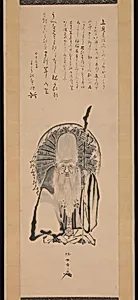
Fukurokuju
Medium
Hanging scroll; ink and color on paper
Dimensions
Image: 33 3/4 × 11 1/4 in. (85.7 × 28.6 cm) Overall with mounting: 59 3/4 × 15 1/8 in. (151.8 × 38.4 cm) Overall with knobs: 17 in. (43.2 cm)
Classification
Paintings
Culture & Period
Japan · Edo period (1615–1868)
Department
Asian Art
Museum
Metropolitan Museum of Art, New York, NY
Credit
The Harry G. C. Packard Collection of Asian Art, Gift of Harry G. C. Packard, and Purchase, Fletcher, Rogers, Harris Brisbane Dick, and Louis V. Bell Funds, Joseph Pulitzer Bequest, and The Annenberg Fund Inc. Gift, 1975
Accession Number
1975.268.131
Rights
Public Domain
Tags
Art Historical Context
**Fukurokuju** Katsukawa Shunshō1726–1792) with Tegara no Okamo, 1798 Hanging scroll; ink and color on paper Metropolitan Museum of Art *Fukurokuju*, a captivating hanging scroll from Japan's Edo period (1615–1868), one of the beloved Seven Lucky Gods (Shifukujin). by ukiyo-e master Kats Shunshō in collaboration with Tegara no Okchi, this 1798 work portrays Fukurokuju, the god of longevity, wisdom, and prosperity. Often shown with his distinctive elongated forehead and accompanied by a crane or turtle—symbols of long life—the figure embodies wishes for happiness and fortune, a popular motif in Japanese folk religion. Rendered in vibrant ink and color on paper, the scroll exemplifies traditional Japanese painting techniques, where delicate brushwork brings ethereal grace to the divine subject. Measuring nearly 34 inches tall, it was designed for ceremonial display, unrolled on special occasions in homes or temples. Shunshō, renowned for his actor portraits in the Katsukawa school, infused this piece with the floating world (ukiyo-e) style's lively realism and emotional depth, bridging printmaking and painting traditions. This artwork reflects Edo Japan's cultural flourishing, where art celebrated everyday spirituality amid urban prosperity. Part of The Harry G. C. Packard Collection, it invites visitors to ponder timeless blessings of health and joy. (198 words)
About the Artist
Katsukawa Shunshō 勝川春章|Tegara no Okamochi (Japanese) · 1726 –1792
Japanese, 1726–1792