
Funerary Cone of the Herald Ibety
Unknown Artist
ca. 1550–1295 B.C.
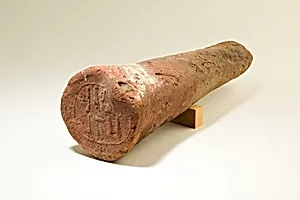
Medium
Pottery
Dimensions
Preserved L. 26.2 cm (10 5/16 in.); Diam. 8 cm (3 1/8 in.)
Classification
Cone, circular impression, Ibety, herald
Period
New Kingdom
Department
Egyptian Art
Museum
Metropolitan Museum of Art, New York, NY
Credit
Rogers Fund and Edward S. Harkness Gift, 1913
Accession Number
13.180.43
Rights
Public Domain
Tags
Art Historical Context
Step into the world of ancient Egypt with the *Funerary Cone of the Heraldety*, a poignant artifact from the New Kingdom's 18 (ca. 1550–1295 B.C.). These conical pottery objects, about 26 cm long and 8 cm in diameter were mass-produced and embedded above tomb entrances or in exterior niches. Inscribed with hieroglyphs the deceased—in this case, Ibety a herald or court messenger—they served as eternal calling cards, invoking passersby to offer food and prayers for the soul's sustenance in the afterlife. Crafted from fired clay, a durable and accessible medium, these cones reflect the Egyptians' innovative funerary practices during a golden age of empire-building and monumental art under pharaohs like Thutmose III and Amenhotep III. The hieroglyphic inscriptions not only preserved the owner's status but also embodied *ka*—the life force—ensuring remembrance amid Thebes' vast necropolises. Simple yet profound, they highlight how everyday officials secured immortality alongside royalty. Today, this cone graces the Metropolitan Museum of Art's Egyptian Art collection, acquired through the Rogers Fund and Edward S. Harkness Gift in 1913. It offers a tangible glimpse into the democratic spirit of New Kingdom burial customs, where even mid-level functionaries like Ibety claimed a piece of eternity.