
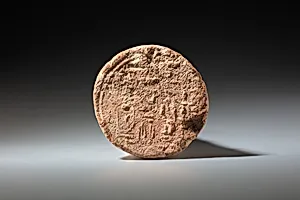
Funerary Cone of the Steward Bak
Unknown Artist
ca. 1504–1492 B.C.
Medium
Pottery
Dimensions
L. 28 × Diam. 8.5 cm (11 × 3 3/8 in.)
Classification
Cone, circular impression, Bak, steward, Thutmose I, Nay, house mistress, Aye
Period
New Kingdom
Department
Egyptian Art
Museum
Metropolitan Museum of Art, New York, NY
Credit
Gift of Norman de Garis Davies, 1930
Accession Number
30.6.25
Rights
Public Domain
Tags
Art Historical Context
Step into the world of ancient Egypt with the *Funerary Cone of Steward Bak*, a modest yet poignant artifact from the New Kingdom's 18 (ca. 1504–1492 B.C.). Crafted from pottery, this cone-shaped object measures 28 cm long and 8.5 cm in diameter, designed to be embedded in the walls or niches of a tomb entrance at Thebes. Its primary purpose was magical: inscribed with hieroglyphs bearing the name and titles of Bak, a royal steward, it invoked eternal offerings of bread, beer, and oxen for the deceased's spirit, or *ka*, ensuring nourishment in the afterlife. This unassuming pottery piece exemplifies the New Kingdom's refined funerary traditions during Egypt's imperial golden age under pharaohs like Thutmose I. Mass-produced yet personalized, funerary cones like this one—over 2,000 have been found—reflect a democratized access to eternity, not just for royalty but for officials like Bak who served the court. The incised hieroglyphs, fired into the clay, showcase the era's mastery of durable, symbolic writing, blending artistry with religious devotion. Today, gifted to the Metropolitan Museum of Art in 1930 by Norman de Garis Davies, this cone offers visitors a tangible link to ancient beliefs in immortality, reminding us how everyday objects carried profound spiritual weight.