
Funerary Staffs
15th–16th century
Medium
Wood, paint, metal
Dimensions
H. 51 x W. 2 7/8 x D. 5/8 in. (129.5 x 7.3 x 1.6 cm)
Classification
Wood-Sculpture
Culture
Inca
Department
Arts of Africa, Oceania, and the Americas
Museum
Metropolitan Museum of Art, New York, NY
Credit
The Michael C. Rockefeller Memorial Collection, Bequest of Nelson A. Rockefeller, 1979
Accession Number
1979.206.1030
Rights
Public Domain
Tags
Art Historical Context
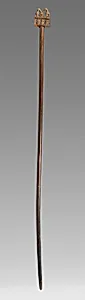
These elegant *Funerary Staffs*, crafted by Inca artists in the 15th–16th century, exemplify the sophisticated wood sculpture of the Inca Empire at its zenith. Standing over four feet tall and slender as a staff (H. 51 x W. 2 7/8 x D. 5/8 in.), they are carved from wood, vividly painted, and adorned with metal elements—likely gold or silver alloys prized in Inca metallurgy. Delicate bird motifs, a recurring tag in this piece, evoke the spiritual realm, as birds held profound symbolic power in Andean cosmology, often representing messengers between worlds or divine ancestors. Produced during the height of the Inca Empire (Tawantinsuyu), which spanned modern-day Peru and beyond until the Spanish conquest around 1533, these staffs served crucial funerary roles. They were likely carried in rituals honoring the deceased nobility, whose mummified bodies were paraded in processions, symbolizing continuity between the living and ancestral spirits. The combination of carved wood, polychrome paint, and metal reflects Inca mastery in blending organic and precious materials, creating objects both functional and sacred. Today, housed in The Metropolitan Museum of Art's Michael C. Rockefeller Memorial Collection, these staffs offer a window into Inca reverence for the afterlife, reminding us of a culture where art bridged the earthly and eternal. Visitors, pause to admire the intricate bird carvings—they whisper tales of imperial devotion and artistry.