
Furi Tsuzumi
Unknown Artist
19th century
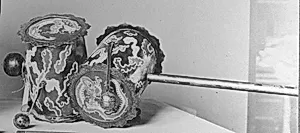
Medium
Wood, skin
Dimensions
H. 16 in.; Diam. of cylinders 5 in.
Classification
Membranophone-double-headed / barrel drum
Culture
Japanese
Department
Musical Instruments
Museum
Metropolitan Museum of Art, New York, NY
Credit
The Crosby Brown Collection of Musical Instruments, 1889
Accession Number
89.4.1481
Rights
Public Domain
Tags
Art Historical Context
This striking Furi Tsuzumi, a double-headed barrel drum from 19th-century Japan, exemplifies the refined craftsmanship of traditional Japanese musical instruments. Standing 16 inches tall with cylinders five inches in diameter, it is constructed from wood and animal skin, allowing for resonant tones when played. Acquired by the Metropolitan Museum of Art in 1889 as part of the Crosby Brown Collection, the drum reflects Japan's long-standing tradition of integrating music into ceremonial and theatrical life. The instrument's classification as a membranophone highlights its cultural role in producing rhythmic accompaniment for performances and rituals. Its dragon motifs, suggested by the museum's tags, add layers of symbolic meaning—dragons often represent power, protection, and natural forces in Japanese art, likely enhancing the drum's visual and spiritual impact during use. As an artifact from the late Edo or early Meiji period, this piece offers visitors a glimpse into how everyday objects blended utility with artistic expression, preserving both sound and story across generations.