
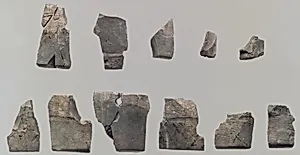
Furniture element
Unknown Artist
ca. 18th century BCE
Medium
Ivory
Classification
Ivory/Bone-Ornaments
Culture & Period
Old Assyrian Trading Colony · Middle Bronze Age–Old Assyrian Trading Colony
Department
Ancient Near Eastern Art
Museum
Metropolitan Museum of Art, New York, NY
Credit
Gift of Mrs. George D. Pratt, in memory of George D. Pratt, 1936
Accession Number
36.70.37z3
Rights
Public Domain
Art Historical Context
This delicate ivory furniture element, dating to around the 18th century, hails from the Old Assyrian Trading Colony—a network of merchant outposts in ancient Anatolia (modern-day Turkey). During the Middle Bronze Age, Assyrian traders from northern Mesopotamia established these colonies, like the famed site of Kanesh, to exchange textiles, tin, and luxury goods for silver and metals. Such an object would have adorned elite furniture, symbolizing the prosperity and far-reaching connections of these commercial hubs. Carved from elephant ivory—a rare, imported luxury sourced from distant regions like Syria or even India—the piece exemplifies the exquisite craftsmanship of Near Eastern artisans. Ivory's smooth, luminous quality made it ideal for inlays and ornaments, often incised with fine details to catch the light. Though specifics of its design are modest, it reflects the technical skill in carving hard materials, a hallmark of Bronze Age luxury arts that bridged cultures across the ancient world. Today, this artifact graces the Metropolitan Museum of Art's Ancient Near Eastern Art collection, a generous gift from Mrs. George D. Pratt in memory of George D. Pratt (1936). It offers a tangible glimpse into the daily elegance of long-distance trade and the sophistication of early global economies.